Ever stop and watch your food slowly spin in the microwave? It’s almost hypnotic. A plate of leftovers, a bag of popcorn, a mug of water—they all take a gentle ride on that glass carousel. It’s such a standard feature that we rarely question it. But have you ever wondered, What Is The Purpose Of A Microwave Turntable exactly? Is it just for show, or is it the unsung hero of your kitchen appliance?
As the expert behind Vua Lo Vi Song, I’ve spent years taking these machines apart, testing their limits, and understanding the science that makes them tick. Let me tell you, that spinning plate is far more than a decorative feature. It’s a brilliant, simple solution to a fundamental challenge in microwave technology, and understanding it will help you cook and reheat food better than ever before.
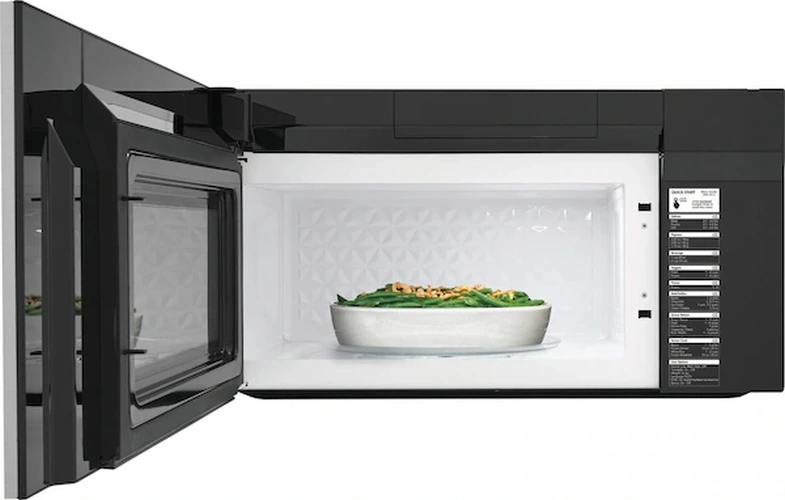
The Science Behind the Spin: Taming Hot and Cold Spots
To grasp why the turntable is so crucial, we first need a quick refresher on how a microwave oven actually works. It’s not magic, it’s science!
Inside every microwave is a device called a magnetron. This component generates invisible waves of energy—microwaves. These waves bounce around the metal interior of the oven, and when they hit your food, they cause the water molecules within it to vibrate rapidly. This vibration creates friction, and that friction generates heat, cooking your food from the inside out.
Sounds simple, right? Here’s the catch. As these waves bounce around, they create a pattern of “standing waves,” much like the vibrations on a guitar string. This pattern results in:
- Hot Spots: Areas where the microwave energy is most concentrated.
- Cold Spots: Areas where the energy is much weaker.
If you were to place a slice of bread covered in cheese into a microwave without a turntable and cook it for a minute, you’d see this phenomenon firsthand. You’d end up with some spots of perfectly melted, bubbly cheese right next to spots that are still cold and solid. Not exactly an ideal meal.
This is precisely the problem the turntable was invented to solve.
So, What Is the Purpose of a Microwave Turntable?
The primary purpose of a microwave turntable is to ensure even cooking by rotating the food through the oven’s hot and cold spots. As the plate spins, every part of your meal gets a turn passing through the high-energy areas, absorbing the microwaves more uniformly. This simple mechanical rotation eliminates the risk of having one side of your lasagna scorching hot while the other remains lukewarm. It’s the key to a consistently heated meal.
But Do All Microwaves Need a Turntable? The Rise of Flatbed Technology
For decades, the turntable was the standard. But as technology has evolved, a new type of microwave has emerged: the flatbed microwave. So, if the turntable is so important, how do these work?
Instead of moving the food, flatbed microwaves move the energy. They use a special antenna, often hidden beneath the flat ceramic floor of the oven, that rotates or “stirs” the microwaves. This scatters the energy waves throughout the cooking cavity, distributing them evenly without needing to spin the food itself.
Let’s break down the differences:
| Feature | Turntable Microwaves | Flatbed Microwaves |
|---|---|---|
| Heating Method | Food rotates through stationary energy waves. | Energy waves are rotated around stationary food. |
| Usable Space | Limited by the circular plate. Awkward for large, rectangular dishes. | The entire floor is usable. Perfect for large casseroles or multiple items. |
| Cleaning | Requires removing and washing the glass plate and roller ring. | Simple, flat surface is easy to wipe clean. |
| Cost | Generally more common and less expensive. | Often found in higher-end or built-in models. |
| Reliability | Turntable motor or roller ring can break. | Stirrer mechanism is internal and generally very reliable. |
While flatbed models offer more space and easier cleaning, a well-designed microwave with a turntable can be just as effective for most everyday tasks. If you are in the market for a new kitchen appliance, consider how you use it. Do you often cook for a crowd in large dishes? A flatbed might be worth the investment. For reheating, defrosting, and daily meals, a traditional countertop microwave with a turntable is a fantastic, reliable choice.
|
Our Picks for the Best Microwave Oven in 2026
As an Amazon Associate, we earn from qualifying purchases.
|
||
| Num | Product | Action |
|---|---|---|
| 1 | Farberware 0.7 Cu. Ft. Countertop Microwave Oven – 700 Watts Power, Auto Cook Settings, Defrost, Easy Clean and Child Safety Lock - Stainless |

|
| 2 | Breville BOV450XL Mini Smart Countertop Oven and Toaster Oven, Small, Brushed Stainless Steel |
|
| 3 | COMFEE\' EM720CPL-PMB Countertop Microwave Oven with Sound On/Off, ECO Mode and Easy One-Touch Buttons, 0.7cu.ft, 700W, Black |
|
| 4 | BLACK+DECKER EM720CB7 Digital Microwave Oven with Turntable Push-Button Door, Child Safety Lock, 700W, Stainless Steel, 0.7 Cu.ft |
|
| 5 | BLACK+DECKER Digital Microwave Oven with Turntable Push-Button Door, Child Safety Lock, Stainless Steel, 0.9 Cu Ft |
|
| 6 | TOSHIBA EM131A5C-BS Countertop Microwave Ovens 1.2 Cu Ft, 12.4\" Removable Turntable Smart Humidity Sensor 12 Auto Menus Mute Function ECO Mode Easy Clean Interior Black Color 1000W |
|
| 7 | Chefman Countertop Microwave Oven 0.7 Cu. Ft., 700 Watts with 10 Power Levels, 6 Cooking Presets with One-Touch Express Cook, Eco Mode, Child Safety Lock, & Mute Button - Black |
|
| 8 | Cooks Innovations Non-Stick Oven Protector Mat - Heavy Duty Nonstick Oven Rack Liners to Protect Convection, Electric, Gas, & Microwave Ovens - BPA & PFOA Free Heat Resistant Baking Mat |
|
| 9 | Chefman Countertop Microwave Oven 1.1 Cu. Ft. Digital Stainless Steel Microwave 1000 Watts with 6 Auto Menus, 10 Power Levels, Eco Mode, Memory, Mute Function, Child Safety Lock, Easy Clean |
|
| 10 | TOSHIBA ML-EM09PA(BS) Small Microwave Oven with 6 Auto Menus, Mute Function & Child Lock, LED Lighting, Perfect for Apartment, 0.9 Cu Ft, 10.6 Inch Removable Turntable, 900W, Black Stainless Steel |
|
What to Do When Your Turntable Stops Spinning
It happens to the best of us. You put your food in, press start, and… nothing. The light comes on, you hear the hum, but the plate just sits there. A non-spinning turntable means you’re headed for unevenly cooked food.
Before you call for a repair, here are a few things you can check yourself:
- Check for Obstructions: Is a large plate or an oversized food item catching on the walls of the microwave? Make sure the dish can spin freely before you start.
- Clean the Components: Food debris and grease can jam the works. Carefully remove the glass plate and the plastic roller ring underneath. Wash them with warm, soapy water. While they’re out, wipe down the floor of the microwave, especially the area where the rollers travel.
- Inspect the Roller Ring: Check the small wheels on the ring. Are they all intact and able to spin freely? If one is broken or stuck, the whole ring may need to be replaced.
- Check the Coupler: The coupler is the small, usually three-pronged plastic piece in the center of the microwave floor that connects to the motor and turns the plate. Make sure it’s not cracked or stripped.
“In my 15 years as an appliance technician,” says John Miller, a seasoned expert, “I’d say a dirty or misaligned roller ring is the cause of a non-spinning turntable about 70% of the time. Always start with a thorough cleaning before assuming it’s a mechanical failure. It can save you a service call.”
If you’ve tried all of these steps and it still won’t spin, the turntable motor itself may have failed. At this point, it’s best to consult your user manual or a qualified technician.
Getting the Most Out of Your Turntable
Just because it spins doesn’t mean you can’t improve its performance. To achieve cooking perfection, placement matters!
- Avoid the Center: It might seem counterintuitive, but the very center of the turntable is often a cold spot. The waves are spinning around it. For more even cooking, arrange your food in a ring or donut shape, leaving the center empty.
- Off-Center is Better: If you’re reheating a single item like a baked potato or a chicken breast, place it slightly off-center on the plate. This ensures it travels through a wider range of the microwave’s energy field.
- Stir and Rotate: For soups, stews, or dense foods like mashed potatoes, the turntable needs a little help. Pause the cooking cycle halfway through to give the food a good stir or to manually rotate the dish 180 degrees.
Frequently Asked Questions (FAQ)
Here are some common questions I hear about microwave turntables.
Q: Can I use my microwave without the turntable?
A: It’s not recommended. Without the turntable, your food will cook very unevenly. Furthermore, running the microwave without the plate and roller ring in place can sometimes cause concentrated energy to reflect back to the magnetron, potentially damaging it over time. The exception is if your model has a “turntable off” feature, which usually activates a stirrer mode.
Q: Are all microwave turntables the same size?
A: No, they are not universal. Turntables are specific to the microwave’s brand and model, varying in diameter and the design of the center coupling. If you need a replacement, be sure to look up the correct part number for your specific microwave oven.
Q: Why does my food still cook unevenly even with a turntable?
A: This can be due to food density or shape. Very dense foods, like a thick piece of meat, will always cook more slowly in the center. Try using a lower power setting for a longer time to allow heat to penetrate more gently. Also, remember to stir or rearrange food halfway through.
Q: How do I clean a really greasy microwave turntable?
A: For tough, baked-on grease, you can soak the glass plate in hot, soapy water. For a natural cleaning solution, place a microwave-safe bowl with 1 cup of water and a few tablespoons of vinegar inside the microwave. Run it for 3-5 minutes until it steams up. The steam will loosen the grime, making the plate and the microwave interior much easier to wipe clean.
Q: What’s better, a glass or a metal turntable?
A: You should never use a metal turntable unless it came specifically with your microwave (which is extremely rare and usually found in convection-microwave combo units). Glass is the standard because it’s transparent to microwaves, allowing the energy to pass through and cook the food. Metal reflects microwaves and can cause arcing or sparks, which is a serious fire hazard.
The Final Spin
So, what is the purpose of a microwave turntable? It’s the simple yet ingenious heart of your microwave’s cooking system, a silent rotator on a mission for culinary consistency. It transforms a potentially flawed heating method into a reliable and efficient one, ensuring your meals are heated through and through.
Whether you’re using a classic model with a spinning plate or a modern flatbed, understanding the principles of how your kitchen appliance works empowers you to use it more effectively. The next time you watch that glass plate begin its slow, steady dance, you’ll know it’s not just going in circles—it’s chasing perfection.