Finding the perfect spot for your microwave can feel like a game of kitchen Tetris, can’t it? You’ve got this incredibly useful appliance, but it’s often a bulky box that just doesn’t seem to fit anywhere. We’ve all been there. That’s why exploring smart microwave placement ideas for your kitchen isn’t just about aesthetics; it’s about reclaiming your counter space and creating a more functional, streamlined workflow. Did you know the first commercial microwave oven was nearly 6 feet tall and weighed over 750 pounds? Thankfully, we have more manageable options today, but the placement puzzle remains.
The Classic: On the Countertop
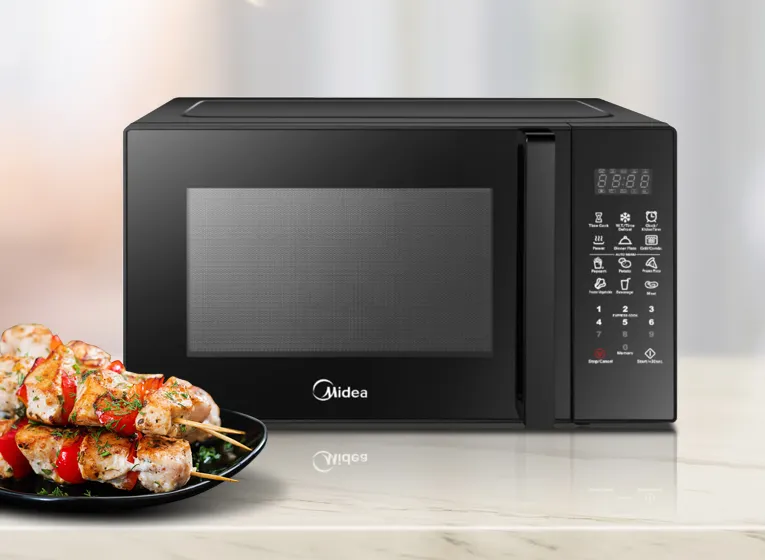
Let’s start with the most common solution: simply placing your countertop microwave on the kitchen counter. It’s the path of least resistance and the go-to for most households, especially in rental situations where you can’t make permanent changes.
The Pros
- Zero Installation: This is the ultimate plug-and-play option. Unbox it, plug it in, and you’re ready to start reheating last night’s pizza.
- Portability: If you rearrange your kitchen or move to a new home, your microwave can easily come with you.
- Affordability: Countertop models are generally the most budget-friendly type of microwave, offering a wide range of features without the added cost of installation.
The Cons
- The Space Hog: This is the big one. In a small kitchen, a microwave can devour a significant chunk of valuable prep space. I remember my first apartment kitchen where the microwave and the toaster basically owned an entire section of the counter.
- Visual Clutter: A standalone appliance can break the clean lines of your kitchen design, making the space feel more cluttered than it is.
The Space-Saver: Over the Range (OTR)
The over-the-range microwave is a popular choice in many modern kitchens, particularly in North America. This design combines your microwave with a range hood ventilation system, positioning it directly above your stove or cooktop.
The Pros
- Frees Up the Counter: This is the primary benefit. By moving the microwave up and off the counter, you instantly gain back precious real estate for chopping, mixing, and plating.
- Integrated Ventilation: OTR microwaves have built-in fans to help vent smoke, steam, and cooking odors from your stovetop. Some vent to the outside, while others recirculate the air through a filter.
The Cons
- Installation Required: Unlike a countertop model, an OTR microwave requires proper installation, which often means hiring a professional to ensure it’s securely mounted and wired correctly.
- Accessibility Issues: For shorter individuals or children, reaching up over a hot stove can be awkward and potentially unsafe.
- Ventilation Performance: While convenient, the ventilation fan in an OTR microwave is often less powerful than a dedicated, standalone range hood. If you do a lot of heavy, greasy, or smoky cooking, it might not be sufficient.
Expert Tip: “Always check the CFM (Cubic Feet per Minute) rating on an OTR microwave’s vent fan,” advises John Miller, an appliance technician with over 15 years of experience. “A higher CFM means more powerful ventilation, but it might not rival a dedicated hood. It’s a trade-off between convenience and performance.”
The Sleek Solution: Built into Cabinetry
For a truly seamless and high-end look, a built-in microwave is the gold standard. This involves installing the microwave directly into a custom-built cabinet space, often surrounded by a trim kit that matches your other appliances.
The Pros
- Flawless Integration: A built-in microwave creates a clean, custom look that elevates your kitchen’s design. It looks intentional and part of a cohesive plan.
- Ergonomic Height: You have the flexibility to place it at a comfortable height—not too high and not too low. A popular spot is above a wall oven.
The Cons
- Highest Cost: Built-in models and their required trim kits are significantly more expensive than countertop or OTR options. The custom cabinetry also adds to the cost.
- Ventilation is Crucial: This is non-negotiable. Microwaves generate heat and require airflow. The cabinet must be designed to allow for proper ventilation to prevent overheating and potential fire hazards. Never just shove a standard countertop model into a tight cabinet hole.
|
Our Picks for the Best Microwave Oven in 2026
As an Amazon Associate, we earn from qualifying purchases.
|
||
| Num | Product | Action |
|---|---|---|
| 1 | Chefman Countertop Microwave Oven 0.7 Cu. Ft., 700 Watts with 10 Power Levels, 6 Cooking Presets with One-Touch Express Cook, Eco Mode, Child Safety Lock, & Mute Button - Black |

|
| 2 | TOSHIBA EM131A5C-BS Countertop Microwave Ovens 1.2 Cu Ft, 12.4\" Removable Turntable Smart Humidity Sensor 12 Auto Menus Mute Function ECO Mode Easy Clean Interior Black Color 1000W |
|
| 3 | COMFEE\' EM720CPL-PMB Countertop Microwave Oven with Sound On/Off, ECO Mode and Easy One-Touch Buttons, 0.7cu.ft, 700W, Black |
|
| 4 | Chefman Countertop Microwave Oven 1.1 Cu. Ft. Digital Stainless Steel Microwave 1000 Watts with 6 Auto Menus, 10 Power Levels, Eco Mode, Memory, Mute Function, Child Safety Lock, Easy Clean |
|
| 5 | BLACK+DECKER EM720CB7 Digital Microwave Oven with Turntable Push-Button Door, Child Safety Lock, 700W, Stainless Steel, 0.7 Cu.ft |
|
| 6 | TOSHIBA ML-EM09PA(BS) Small Microwave Oven with 6 Auto Menus, Mute Function & Child Lock, LED Lighting, Perfect for Apartment, 0.9 Cu Ft, 10.6 Inch Removable Turntable, 900W, Black Stainless Steel |
|
| 7 | Cooks Innovations Non-Stick Oven Protector Mat - Heavy Duty Nonstick Oven Rack Liners to Protect Convection, Electric, Gas, & Microwave Ovens - BPA & PFOA Free Heat Resistant Baking Mat |
|
| 8 | BLACK+DECKER Digital Microwave Oven with Turntable Push-Button Door, Child Safety Lock, Stainless Steel, 0.9 Cu Ft |
|
| 9 | Farberware 0.7 Cu. Ft. Countertop Microwave Oven – 700 Watts Power, Auto Cook Settings, Defrost, Easy Clean and Child Safety Lock - Stainless |
|
| 10 | Breville BOV450XL Mini Smart Countertop Oven and Toaster Oven, Small, Brushed Stainless Steel |
|
The Hidden Gem: Inside a Pantry or on a Shelf
If you prefer a completely uncluttered countertop, hiding the microwave is an excellent strategy. This can be done by placing it on a deep shelf within a pantry or in a dedicated “appliance garage” with a door that closes.
The Pros
- Out of Sight, Out of Mind: This is the ultimate solution for a minimalist kitchen aesthetic. When not in use, the microwave is completely hidden.
- Uses Existing Space: If you have a large pantry, dedicating one shelf to the microwave is an efficient use of space that’s already there.
The Cons
- Inconvenience: Opening a pantry or cabinet door every time you need to use the microwave can become tedious.
- Safety First: Just like with built-in models, you must ensure there is adequate clearance on all sides and in the back for ventilation. An electrical outlet also needs to be conveniently located.
The Creative Twist: The Microwave Drawer
One of the most innovative microwave placement ideas for your kitchen is the microwave drawer. Instead of a swinging door, this appliance pulls out like a drawer and is typically installed below the countertop, often in a kitchen island or lower cabinet bank.
The Pros
- Superior Accessibility: They are incredibly easy to use. You can stir food without removing the container, and there’s no need to reach up high. This makes them a fantastic choice for families with children and for homeowners planning for aging-in-place.
- Sleek and Modern: Microwave drawers offer a cutting-edge look that is both stylish and discreet.
- Improved Safety: You’re lifting hot dishes up and out, not pulling them down from above, which significantly reduces the risk of spills and burns.
The Cons
- Premium Price Tag: This is the most expensive type of microwave on the market.
- Cleaning: Spills can be a bit more awkward to clean from the bottom of a drawer compared to a traditional microwave.
Key Factors to Consider for Any Placement
Before you commit, think about these crucial elements, no matter which placement idea you choose.
- The Landing Zone: Where will you put a screaming-hot bowl of soup when you take it out? There should always be a clear, heat-resistant counter space—a “landing zone”—right next to or below the microwave.
- Ventilation: We’ve said it before, but it bears repeating. Microwaves need to breathe. Check the manufacturer’s specifications for required clearance (usually a few inches on the sides, top, and back).
- Electrical Access: Ensure there is a dedicated electrical outlet nearby. Avoid using extension cords for a major appliance like a microwave.
- Workflow and Ergonomics: Think about how you use your kitchen. A microwave is often used to heat things from the fridge or freezer, so placing it near the refrigerator often makes the most sense.
Frequently Asked Questions
Can I put a standard countertop microwave inside a cabinet?
You can, but only if the cabinet is specifically designed for it with ample ventilation space around the entire unit and an open front. Never operate a microwave inside a closed cabinet, as this is a serious fire hazard due to heat buildup.
How much clearance does a microwave need?
This varies by model, so always check the user manual. As a general rule, plan for at least 1-2 inches of clearance on the sides and back, and 3-4 inches on top to allow air to circulate properly.
Is an over-the-range microwave as good as a real vent hood?
Generally, no. While an OTR microwave’s fan is better than nothing, a dedicated range hood is almost always more powerful and effective at capturing and removing smoke, grease, and odors from your kitchen.
What is the best height to install a microwave?
The ideal height places the bottom of the microwave between your chest and shoulder level. This allows most adults to see inside the microwave and handle hot food safely without reaching too high or bending too low.
Can I place things on top of my microwave?
It’s best to avoid this. Many microwaves have vents on the top or sides, and blocking them can cause the unit to overheat. The top can also get warm during operation, making it an unsafe spot for items like bread or plants.
Finding the Perfect Spot for Your Microwave
Ultimately, the best choice depends entirely on your kitchen’s layout, your budget, and how you cook. From the simple countertop solution to a sophisticated built-in drawer, there are more options than ever before. By carefully considering the pros, cons, and safety requirements of each, you can move beyond simply finding a place for your microwave and start integrating it intelligently into your kitchen’s design. The right microwave placement ideas for your kitchen can truly transform the space, making it more efficient, beautiful, and enjoyable to use every single day.