Ever found yourself in the home appliance aisle, staring at a wall of microwaves, and feeling a bit overwhelmed? On one end, there’s a simple, budget-friendly box, and on the other, a stainless-steel marvel with more buttons than a spaceship cockpit. The big question on everyone’s mind is, How Much Does A Microwave Cost, and what are you really getting for your money? As the “Microwave King,” I’ve spent years demystifying these kitchen workhorses, and today, I’m here to pull back the curtain for you.
Believe it or not, the price of a new microwave can range from as little as $50 to well over $2,000. That’s a huge gap. This guide will break down exactly what drives that cost, helping you find the perfect sweet spot between features, performance, and your budget. We’re going to move beyond the price tag and explore what truly matters.
The Quick Answer: A Look at Microwave Price Tiers
Before we dive deep, let’s get a general idea of the landscape. I typically break down the market into three main categories.
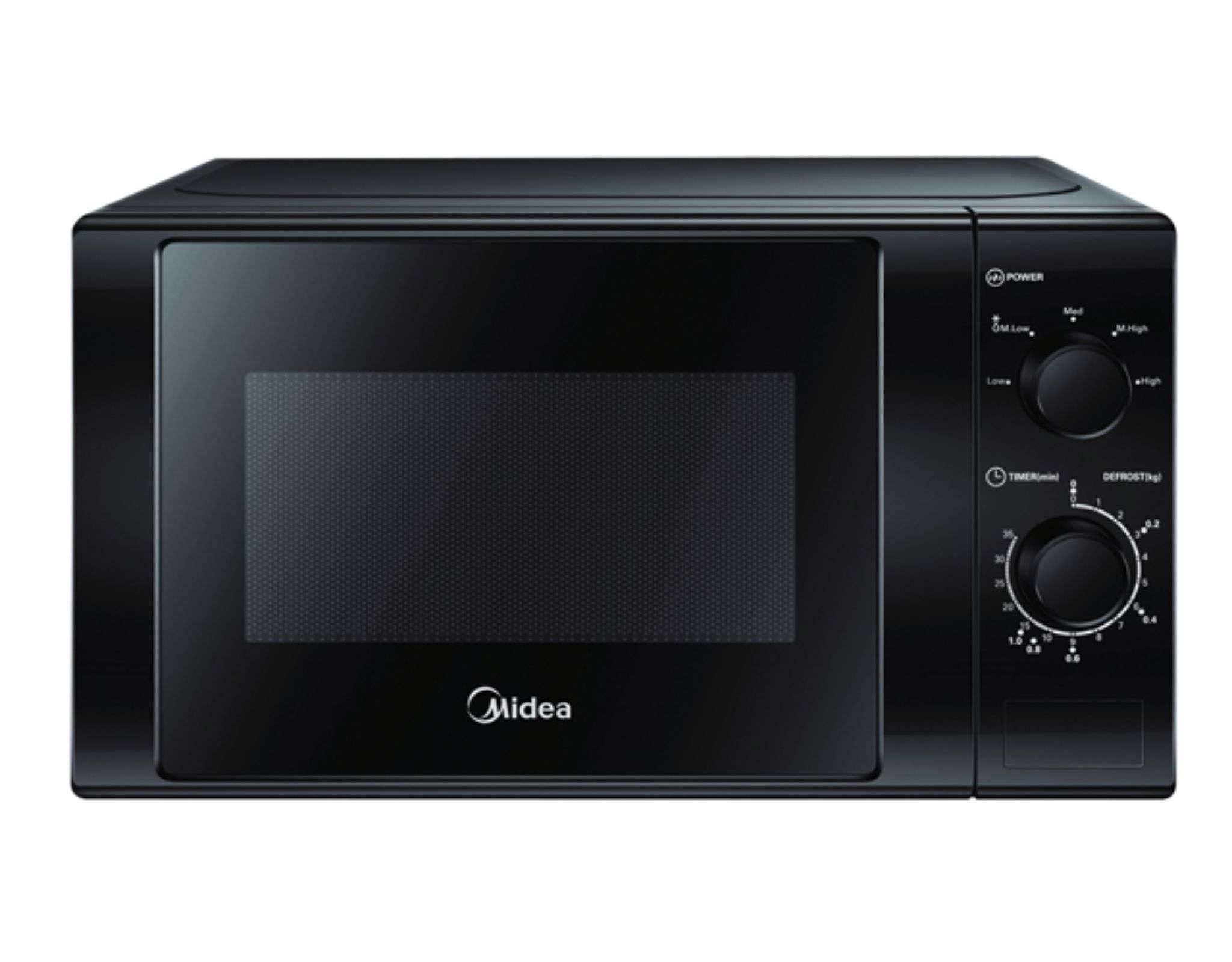
- Budget-Friendly ($50 – $150): These are your basic, no-frills countertop models. They’re perfect for reheating leftovers, making popcorn, and handling simple defrosting tasks. They usually have lower wattage and smaller capacity.
- Mid-Range ($150 – $400): This is the sweet spot for most families. Here you’ll find larger countertop models with higher wattage, sensor cooking, and more presets. This range also includes most standard over-the-range (OTR) microwaves.
- High-End ($400+): Welcome to the world of premium features. In this bracket, you’ll find built-in models, over-the-range units with convection capabilities, air fry functions, and smart-home integration. They often boast superior build quality and advanced technology like inverters.
Now, let’s unpack what separates a $70 model from a $700 one.
What Factors Influence How Much a Microwave Costs?
The price isn’t just an arbitrary number. It’s a direct reflection of the type, size, power, and technology packed into the appliance. Understanding these factors is the key to making a smart purchase.
1. Microwave Type: Where Will It Live?
The single biggest factor affecting price is the type of microwave you choose. There are three main players in the game.
Countertop Microwaves
This is the most common and affordable type. You just plug it in and go. They’re versatile and portable, making them ideal for renters or those who don’t want to commit to a permanent installation.
- Cost: $50 – $500
- Best for: First apartments, dorm rooms, kitchens with ample counter space, and budget-conscious buyers.
Over-the-Range (OTR) Microwaves
As the name suggests, these are installed over your stove. They save precious counter space and double as a ventilation hood for your cooktop. Installation is more complex and adds to the overall cost.
- Cost: $200 – $1,500+
- Best for: Homeowners looking for an integrated look and to free up counter space.
Built-in and Drawer Microwaves
These are the luxury models. Built-in microwaves are designed to fit seamlessly into your cabinetry for a sleek, custom look. Drawer microwaves are a high-end variation installed below a counter, sliding out like a drawer. They offer fantastic accessibility and a futuristic feel.
- Cost: $400 – $2,500+
- Best for: High-end kitchen remodels, those prioritizing aesthetics, and homeowners with specific accessibility needs.
2. Size and Capacity (Cubic Feet)
Microwave capacity is measured in cubic feet (cu. ft.). The bigger it is, the more you can generally expect to pay.
- Compact (Under 1.0 cu. ft.): Great for small spaces and basic tasks. You can fit a dinner plate, but not much more.
- Mid-Size (1.0 to 1.5 cu. ft.): A versatile choice for most couples and small families.
- Full-Size (1.6 to 2.2+ cu. ft.): Ideal for large families or those who cook for crowds. These can often fit large casserole dishes.
3. Wattage: The Power Behind the Cooking
Wattage is the measure of a microwave’s cooking power. Higher wattage generally means faster and more even cooking.
- 700-900 Watts: Found in most compact and budget models. They get the job done, but reheating and defrosting can take longer.
- 1000-1200+ Watts: The standard for mid-range and high-end models. This power level provides efficient and consistent results for a wide range of foods.
Think of it like this: reheating a cup of coffee in a 700-watt microwave might take 90 seconds, while a 1200-watt model could do it in 60. Over time, that adds up.
4. The Real Game-Changer: Inverter Technology
Here’s a piece of tech that truly separates the good from the great. I always tell my clients to look for this if their budget allows.
- Standard Microwaves: These cycle their power on and off. If you set it to 50% power, it’s actually blasting 100% power for half the time and 0% for the other half. This can lead to uneven cooking, with hot spots and cold centers.
- Inverter Microwaves: An inverter delivers a continuous, consistent stream of power at the level you select. Setting it to 50% power means it cooks at a steady 50% power. This results in much more even cooking, better defrosting (no more cooked edges on your frozen chicken), and the ability to gently simmer sauces or melt butter without scorching it.
Expert Take: John Miller, an appliance technician with 15 years of experience, always advises, “An inverter microwave is one of the few features I consider a non-negotiable upgrade. The difference in food quality, especially when defrosting or cooking delicate items, is night and day. It’s worth the slightly higher upfront cost.”
5. Bells and Whistles: The Extra Features
This is where prices can really start to climb. Modern microwaves are becoming multi-function kitchen powerhouses.
- Sensor Cooking: A sensor detects the steam released by food and automatically adjusts the cooking time and power level. No more guesswork.
- Convection Cooking: This feature adds a heating element and a fan to circulate hot air, allowing your microwave to bake, roast, and brown food like a traditional oven. It’s a fantastic space-saver.
- Air Fry & Grill Functions: A newer trend, these features use high-intensity heat to give you crispy, “fried” results with far less oil.
- Smart Features: Wi-Fi enabled microwaves can be controlled with your phone or voice assistant (like Alexa or Google Assistant). You can scan a food’s barcode, and the microwave will download the correct cooking instructions.
|
Our Picks for the Best Microwave Oven in 2026
As an Amazon Associate, we earn from qualifying purchases.
|
||
| Num | Product | Action |
|---|---|---|
| 1 | TOSHIBA ML-EM09PA(BS) Small Microwave Oven with 6 Auto Menus, Mute Function & Child Lock, LED Lighting, Perfect for Apartment, 0.9 Cu Ft, 10.6 Inch Removable Turntable, 900W, Black Stainless Steel |

|
| 2 | TOSHIBA EM131A5C-BS Countertop Microwave Ovens 1.2 Cu Ft, 12.4\" Removable Turntable Smart Humidity Sensor 12 Auto Menus Mute Function ECO Mode Easy Clean Interior Black Color 1000W |
|
| 3 | Farberware 0.7 Cu. Ft. Countertop Microwave Oven – 700 Watts Power, Auto Cook Settings, Defrost, Easy Clean and Child Safety Lock - Stainless |
|
| 4 | BLACK+DECKER EM720CB7 Digital Microwave Oven with Turntable Push-Button Door, Child Safety Lock, 700W, Stainless Steel, 0.7 Cu.ft |
|
| 5 | Breville BOV450XL Mini Smart Countertop Oven and Toaster Oven, Small, Brushed Stainless Steel |
|
| 6 | Chefman Countertop Microwave Oven 0.7 Cu. Ft., 700 Watts with 10 Power Levels, 6 Cooking Presets with One-Touch Express Cook, Eco Mode, Child Safety Lock, & Mute Button - Black |
|
| 7 | COMFEE\' EM720CPL-PMB Countertop Microwave Oven with Sound On/Off, ECO Mode and Easy One-Touch Buttons, 0.7cu.ft, 700W, Black |
|
| 8 | Cooks Innovations Non-Stick Oven Protector Mat - Heavy Duty Nonstick Oven Rack Liners to Protect Convection, Electric, Gas, & Microwave Ovens - BPA & PFOA Free Heat Resistant Baking Mat |
|
| 9 | BLACK+DECKER Digital Microwave Oven with Turntable Push-Button Door, Child Safety Lock, Stainless Steel, 0.9 Cu Ft |
|
| 10 | Chefman Countertop Microwave Oven 1.1 Cu. Ft. Digital Stainless Steel Microwave 1000 Watts with 6 Auto Menus, 10 Power Levels, Eco Mode, Memory, Mute Function, Child Safety Lock, Easy Clean |
|
So, What’s the Right Price for You?
The best microwave isn’t the most expensive one; it’s the one that fits your lifestyle.
For the Student or Solo Dweller
You’re likely just reheating pizza, making instant noodles, and popping popcorn. A compact, 700-900 watt countertop model is all you need.
- Your likely cost: $60 – $120
For the Busy Family
You need space, power, and convenience. Look for a mid-to-full-size countertop or OTR model with at least 1000 watts, sensor cooking, and a large turntable.
- Your likely cost: $150 – $350
For the Home Chef and Tech Enthusiast
You want it all. You’re looking for a built-in or a high-end OTR model with inverter technology, convection capabilities, and maybe even an air fry setting. You value performance and aesthetics equally.
- Your likely cost: $500+
Don’t Forget the Hidden Costs
When you’re trying to figure out how much does a microwave cost, remember the price tag isn’t the whole story.
- Installation: For OTR and built-in models, professional installation can cost anywhere from $100 to $300, depending on the complexity.
- Electrical Work: If you’re installing a new OTR microwave where there wasn’t one before, you may need an electrician to run a dedicated circuit, which can add to the cost.
- Removal of Old Appliance: Some retailers charge a small fee to haul away your old unit.
The Final Word
Figuring out how much does a microwave cost is less about finding a single number and more about understanding what you value in your kitchen. Do you prioritize speed, versatility, or a seamless look? My final piece of advice is this: don’t overbuy. A $1,000 convection smart microwave is an incredible machine, but if you only ever use it to reheat coffee, you’re not getting your money’s worth.
Be realistic about your daily needs. For most people, a reliable, mid-range countertop or OTR microwave with around 1100 watts and a few handy presets is the perfect intersection of price and performance. It will serve you well for years, perfectly heating your food without breaking the bank.
Frequently Asked Questions (FAQ)
Q1: How long should a microwave last?
A: A good quality microwave should last for about 7 to 10 years with proper use and maintenance. Cheaper, lower-end models may have a shorter lifespan of around 4 to 5 years.
Q2: Is a more expensive microwave really better?
A: Not always. A higher price often means more features, a more stylish design, or a different installation type (like built-in). However, a solid mid-range microwave can often cook just as well as a luxury one for basic tasks. The “better” microwave is the one that has the features you’ll actually use.
Q3: What’s the most important feature to look for?
A: Besides choosing the right type and size for your kitchen, I believe wattage and inverter technology are the most important performance features. Aim for at least 1000 watts for efficient cooking, and consider an inverter model for more even results if it fits your budget.
Q4: Do OTR microwaves ventilate as well as a dedicated range hood?
A: Generally, no. While OTR microwaves provide adequate ventilation for most daily cooking, a dedicated range hood, especially an externally vented one, will almost always be more powerful and effective at removing smoke, steam, and odors.
Q5: What are the most reliable microwave brands?
A: Reliability can vary by model, but brands like Panasonic (who pioneered inverter technology), Breville, Toshiba, GE, and Whirlpool consistently receive high marks for performance and durability from both consumers and testing labs.